
Roots in Foreign Land
Listen in
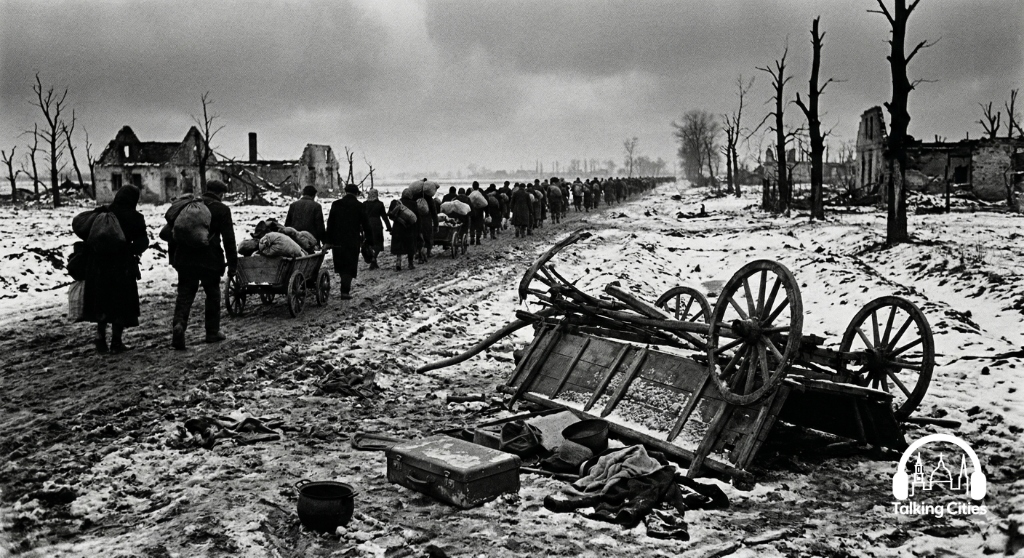
In the complex tapestry of global urban history, few phenomena are as radical as the redesign of Polish borders after World War II. It was not simply a cartographic adjustment; it was a massive social engineering operation that displaced millions of people and forced entire cities to change their language, religion, and soul. What occurred between 1944 and 1960 in the so-called 'Recovered Territories' is a fundamental case study for understanding how urban identity is constructed—and imposed—against the trauma of uprooting.
Baja Silesia: Rebuilding from Ashes
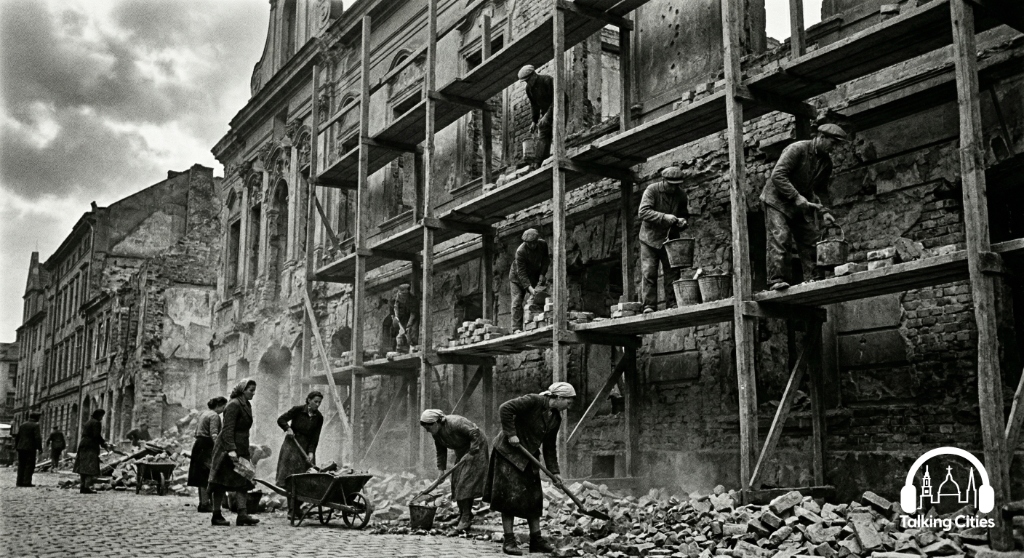
With its capital, Wrocław (formerly Breslau), this region went from being a Prussian bastion to a refuge for those expelled from Lviv. The city, 70% devastated, became the laboratory for a new Polish intelligentsia who had to inhabit buildings whose former owners had just departed for the west.
Western Pomerania: Permanent Provisionality
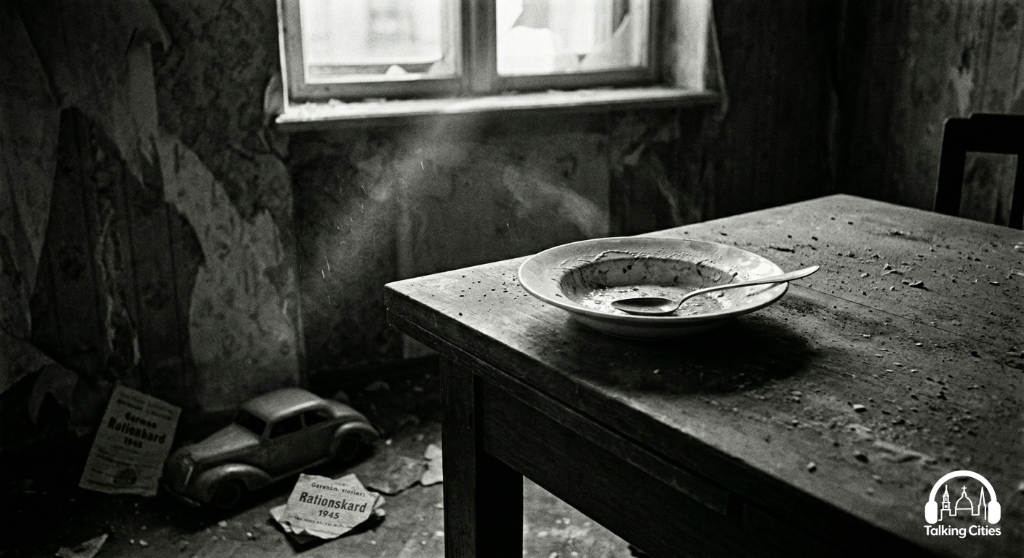
Port cities like Szczecin (Stettin) experienced years of administrative uncertainty. As strategic points in the Baltic, their repopulation was slow, marked by the fear that the border was not final, creating an urban landscape of 'permanent provisionality' for nearly a decade.
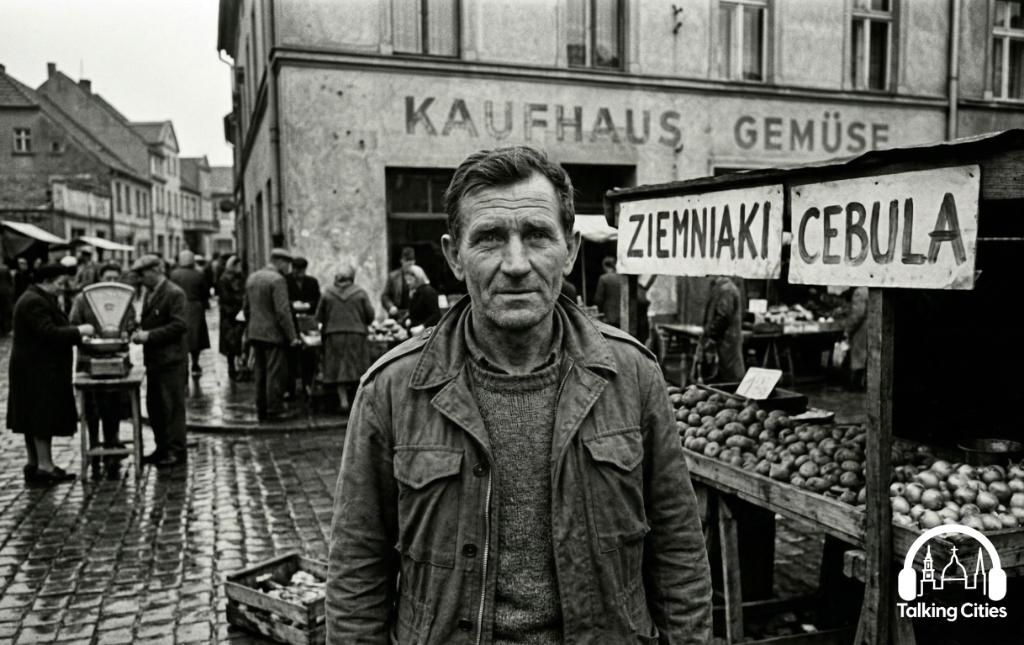
Warmia and Masuria: The Test of Polishness
In the northeast, former East Prussia presented a different challenge: a landscape of lakes and castles where the indigenous population (the Masurians) was subjected to rigorous 'tests of Polishness' to avoid expulsion, creating an identity tension that persisted for generations.
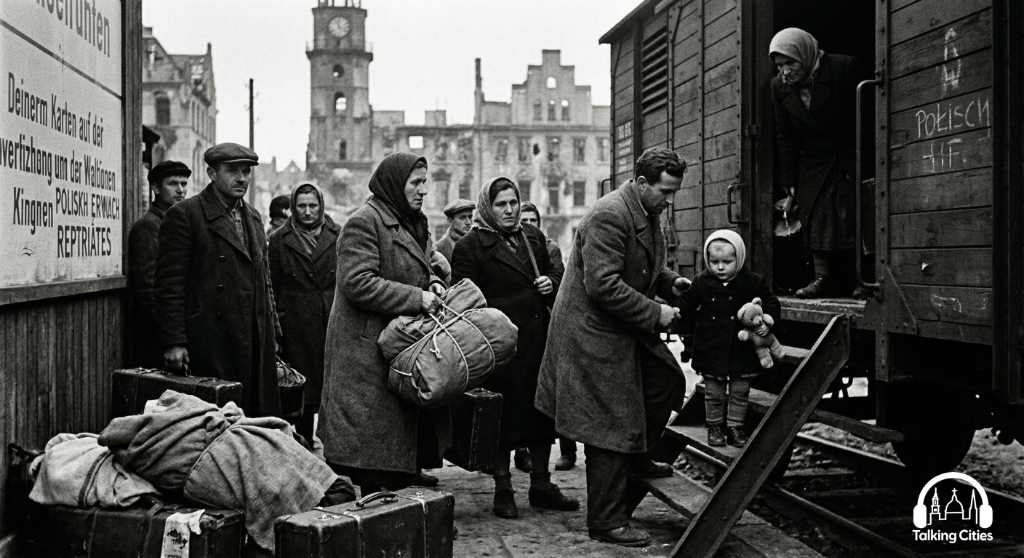
Operation Vistula and the International Mosaics
The repopulation was not monolithic. It was a forced convergence of groups with opposing worldviews. To this complex balance was added Operation Vistula, which dispersed Ukrainian and Lemko communities across these lands. Unexpectedly, between 1950 and 1954, thousands of Greek refugees fleeing the Civil War were also welcomed, settling in 37 localities and injecting a Mediterranean vibrance into the region.
The Forge of a Generational Identity
The identity of these cities was not born in 1945 with the signing of a treaty, but in the decades that followed. For the children and grandchildren of the pioneers, the streets of Zielona Góra, Wrocław, or Szczecin were no longer 'recovered territories' or spoils of war: they were, simply, home. The German past ceased to be a taboo and became an archaeological layer of their own history.
Critical Perspective: Challenging the Official Narrative
It is imperative to question the narrative of 'Recovery'. While historically justified as a return to the Piast lands, the reality was a territorial compensation for the loss of the Kresy. Behind the heroic relato lies the trauma of ethnic cleansing (the German expulsion) and the uprooting of Poles from the east who did not want to leave their homes. Today, the challenge is to embrace this duality without fear.
The current Polish identity in these territories is, paradoxically, one of the most dynamic in the country, precisely because it was born from the need to synthesize multiple origins into a single urban destination.